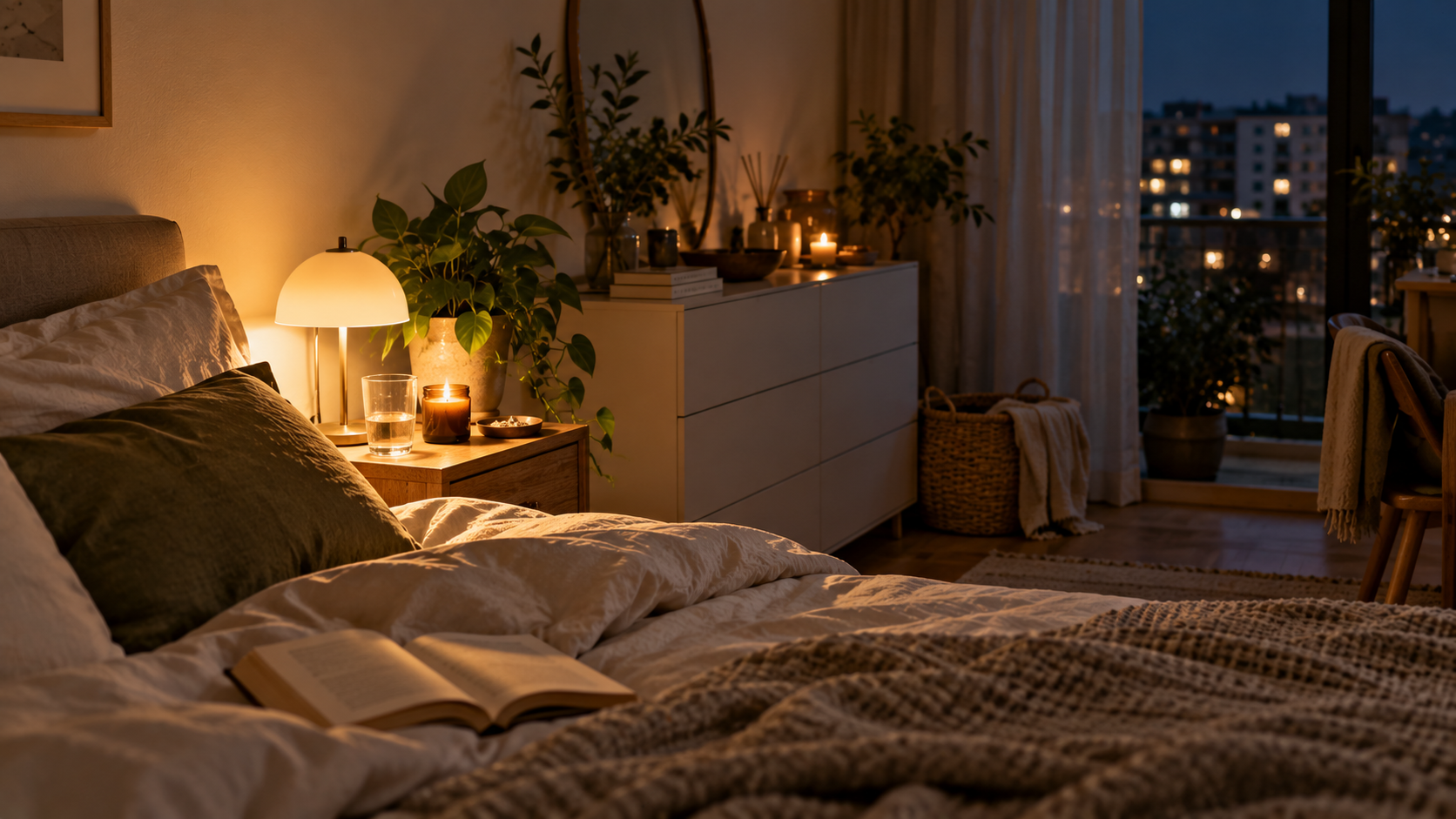
Your Evening Routine Is Where Your Morning Actually Begins
An evening routine is the quiet work you do at the end of the day to help tomorrow start more gently. If you've ever woken up already behind — fumbling for clean clothes, skipping breakfast, feeling rushed before 8 am — there's a good chance the problem started the night before. This article is about changing that, without adding a complicated new system to your life.
An evening routine is a set of small, consistent habits you build into the last one to two hours before bed. It isn't about productivity or self-improvement in the hustle-culture sense. It's about creating a gentler transition from the busyness of the day to proper rest — and setting up tomorrow so it has a chance to feel calm.
Why Your Evening Routine Shapes Your Morning
Most morning routine advice focuses entirely on what you do after you wake up. But the quality of your morning is largely determined the night before — by how well you slept, whether the house is in reasonable order, and whether your brain has had enough time to wind down properly.
Sleep researchers at the Sleep Foundation note that consistent pre-sleep habits help signal to the nervous system that it's time to shift into rest. That's not a mystical claim — it's just how habits and sleep pressure work together. When your body expects rest at a certain time, it starts preparing earlier.
The ripple effect runs both ways. A calming evening routine leads to better sleep, and better sleep leads to a morning that feels less like an emergency. That's the real bridge between your morning and night routine — not inspiration, just sleep.
Where to Start: Know Your Evening Self
Before copying anyone else's routine, it helps to figure out the "evening version" of you in your current season of life. That phrase sounds a bit abstract, but it's asking a practical question: what do your evenings actually look like right now, and what do you genuinely need from them?
Some people come home depleted and need quiet recovery time before they can think about anything else. Others get a second wind around 8 pm and find that's actually a good time to do light prep work. Neither is wrong — but building a routine that ignores your real rhythm means it won't stick.
Ask yourself honestly:
- What time do I usually eat dinner?
- What do I actually do between 8pm and bed right now?
- What's the one thing that, if I did it each evening, would make the next morning noticeably easier?
Start there, not with a twelve-step system someone else built for their life.
What a Good Wind Down Routine Actually Includes
A relaxing evening routine doesn't need to be long. For most people, somewhere between 30 and 60 minutes is realistic and enough. The goal is a gradual shift — from doing to resting — rather than going straight from a screen to expecting deep sleep.
Here are the elements that tend to appear in the most sustainable night routines:
- A consistent start time. Deciding when your evening routine begins matters more than what's in it. Even something as simple as "I start winding down at 9:30pm" creates structure.
- Low-stimulation activity. Reading physical books, gentle stretching, a short walk, journaling — anything that doesn't require decisions or produce excitement.
- Light and temperature shifts. Dimming lights and lowering the room temperature (somewhere around 65–68°F or 18–20°C) genuinely helps with the transition to sleep. This isn't expensive; it just takes remembering.
- A simple skin or body care habit. Not because of any wellness philosophy — just because it's a reliable sensory signal that the day is ending. Self care night routines often anchor themselves around this kind of tactile ritual.
- Tidying one small area. Waking up to a reasonably orderly kitchen or living room costs you three minutes at night and saves you a small amount of low-grade stress every morning.
You don't need all of these. Pick two or three that feel manageable and build from there.
The Screen Time Question
Cut the screen time is the most commonly given evening routine advice, and also the most commonly ignored. So let's be honest about it.
The evidence that blue light from screens meaningfully disrupts sleep in healthy adults is real but modest — many researchers consider the mental stimulation from content (news, social media, emotionally charged shows) a bigger factor than the light itself. That matters because it changes what "cutting screens" actually means in practice.
Rather than a hard rule, consider a softer version: no screens that require decisions or produce anxiety in the last 45 minutes before bed. A familiar comfort show at low brightness probably isn't the problem. Doomscrolling news at 11 pm almost certainly is.
If you want a concrete target: most people find that stopping social media by 9:30 pm and screens entirely by 10:15 pm makes a noticeable difference within a week. But your mileage will vary, and that's fine to acknowledge.
Food, Drink and the Hours Before Bed
Eating a light, early dinner with no snacks afterward is the dietary version of this conversation. It comes up in almost every article on healthy night routines, and for a reasonable cause — digestion keeps the body working, which can interfere with the depth of early sleep.
In practice, "early" usually means finishing dinner by 7 pm if you're going to bed around 10:30–11 pm. That's not always possible on late work nights or with family schedules, and it's not worth feeling guilty about. On the nights when it is possible, it does tend to help.
A few other specifics worth knowing:
- Alcohol might feel like it helps you fall asleep — but it reliably fragments sleep in the second half of the night.
- Caffeine has a half-life of roughly five to six hours. A 4pm coffee still has half its caffeine in your system at 9–10pm.
- A small, carbohydrate-led snack (like a small bowl of oats or a banana) around 8pm can actually help some people feel sleepy — though this varies a lot by person.
The Five-Minute Prep That Changes the Morning
This is where the morning and evening routine connect most directly. Spending five minutes — genuinely five, not twenty — doing light preparation the night before removes the small friction points that make mornings feel frantic.
My evening routine goes something like this for the morning-prep portion: clothes set out, bag by the door, coffee setup ready to switch on, and one look at tomorrow's calendar. That's it. It takes less time than scrolling for five minutes before bed, and the payoff is a morning that starts with movement rather than scrambling.
Specifically, you might consider:
- Laying out tomorrow's clothes (including shoes if that matters to you)
- Packing your bag or checking it's ready
- Reviewing your next day's priorities — not planning, just a quick scan
- Setting your coffee maker or putting the kettle next to the plug
- Writing down one thing you're carrying mentally so it's on paper, not in your head
The last one is underrated. Capturing a worry or a to-do on paper before bed reduces the background hum that keeps some people awake. It's a small thing with a disproportionate return.
Decide on a Set Bedtime
Most evening routine advice eventually gets here: decide on a set bedtime and treat it like a commitment rather than a suggestion. This is genuinely one of the higher-impact habits in the best evening routine research — consistency in sleep timing helps regulate the body's internal clock more than most other single changes.
A few honest notes on this:
- It's easier to keep a consistent wake time than a consistent bedtime. If you can only pick one, most sleep researchers lean toward the wake time.
- Weekends are where this falls apart for most people. A one-hour variation is manageable. Two or more hours of "social jet lag" noticeably affects Monday morning.
- If you're aiming for seven to eight hours and need to wake at 6:30am, you're looking at a 10:30–11pm bedtime. That means starting your wind down routine by 9:30–10pm at the latest.
This isn't about being rigid. It's about giving your body enough regularity to do what it actually wants to do — sleep well and wake up without an alarm eventually doing all the work.
The Sunday Night Routine: A Gentler Version
Sunday evenings have their own particular texture. For a lot of people, they carry a low-grade dread about the week ahead — sometimes called "Sunday scaries" — which makes a calming evening routine even more valuable on that night specifically.
A good Sunday night routine doesn't mean planning every hour of the week. That can tip into anxiety rather than away from it. Instead, consider:
- A brief look at the week — just noting what's coming, not solving it
- Preparing anything for Monday morning that will genuinely reduce stress (outfit, bag, lunch)
- A small ritual that signals the end of the weekend rather than the beginning of dread — a bath, a particular tea, a slow meal
The evening rituals that tend to stick on Sundays are the ones that feel like care rather than obligation. It's a fine line, but worth paying attention to.
How to Actually Keep a Night Routine
Here's where most articles get optimistic and vague. Building a consistent night routine is genuinely hard, especially if your evenings are unpredictable — children, shift work, a social life, a partner on a different schedule.
A few things that help, practically:
- Keep it short enough to do on a hard day. If your routine takes 90 minutes when you're well-rested and motivated, it won't survive a Wednesday in a difficult week. Design it for the hard version of yourself.
- Anchor it to something that already happens. "After the kids are in bed, I dim the lights and put my phone in the other room" is easier to keep than "I start my evening routine at 9pm."
- Don't count missed days as failure. A night routine you do four nights out of seven is still delivering most of the benefit. Consistency over time matters more than perfection each night.
- Review it occasionally. A routine that worked in spring might not fit the shorter evenings of winter, or a season when you're travelling more. Adjust without guilt.
The goal of a healthy evening routine isn't to optimize yourself. It's to end the day with enough care that tomorrow has a fair chance of starting gently. That's a modest, achievable aim — and most nights, it's enough.
Leave a Reply